
For Ukraine, for their Freedom and Ours ! - CSO
Fighting Russian War Propaganda and Its Relays in France
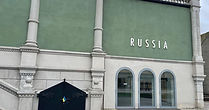
Since 2022, Pour l'Ukraine has been engaged on two fronts against Russian war propaganda in France. At the initiative of the Denis Diderot Committee and Reporters Without Borders, and alongside other partner organizations, Pour l'Ukraine is calling on Arcom and satellite operators to ensure that European sanctions against Russian media are effectively enforced—including on interviews with sanctioned figures, such as Sergey Lavrov—with concrete results achieved through coalition efforts. Pour l'Ukraine independently analyzes Russian propaganda as a form of denialism and has highlighted the silence of Xenia Fedorova, former director of RT France, regarding the deportation of Ukrainian children and the crimes of the Russian army, even as she takes her place within the Bolloré media group. Pour l'Ukraine also denounces the use of the Venice Biennale as a vehicle for rehabilitating Moscow's image and underscores the troubling convergence between certain French political discourses and Moscow's narratives.
Understanding the context
War propaganda: legal framework
International law explicitly prohibits war propaganda. Article 20 of the International Covenant on Civil and Political Rights (1976), a binding treaty ratified by France, states:
"All propaganda in favor of war is prohibited by law."
Article 20, paragraph 1, International Covenant on Civil and Political Rights, 1976
European law in action
Since March 2022, the European Union has adopted successive sanctions against Russian propaganda media outlets—RT, Sputnik, Rossiya 1, NTV, and others—based on Regulation 269/2014, on the grounds that they constitute a threat to “public order and security of the European Union.” These sanctions are immediately applicable: no national transposition is required.
Arcom's role in France
The SREN law, enacted on May 21, 2024, granted Arcom new powers to enforce these sanctions against French satellite and internet operators. However, their implementation remains insufficient.
What " For Ukraine" is specifically asking for
Ukraine and its partner associations make the following requests:
To Arcom
The Regulatory Authority has had the necessary powers and resources since the SREN law of May 2024. Ukraine is asking for:
-
to apply without delay the European sanctions against all sanctioned Russian media outlets — not just on a case-by-case basis and under pressure;
-
to intervene publicly with the French media and journalists to remind them that interviews with individuals sanctioned under EU Regulation 269/2014 constitute a prohibited provision of economic resources;
-
to disseminate and update the complete list of sanctioned personalities to French media and journalists;
-
to demand the removal of interviews already broadcast on the websites and social media of the media outlets concerned; to formally request internet service providers — Orange, Free, SFR, Bouygues Telecom — to block access to the websites and streaming services of sanctioned Russian media, in accordance with the obligations arising from EU Regulation 269/2014; and
-
to impose financial penalties on broadcasters who fail to comply with these obligations.
To satellite operators
Eutelsat and other European satellite operators must immediately cease broadcasting all sanctioned Russian channels and services, without waiting for a formal notice from national authorities. The European sanctions are effective immediately.
To the French media
The organisation "Pour l'Ukraine" calls on French media, and in particular public service broadcasters, to refuse to interview individuals sanctioned by the European Union and to refrain from providing a platform to Kremlin propagandists. The supposed journalistic neutrality cannot justify circumventing European law or the lack of symmetry between an aggressor and their victim.
To the French government
The group is calling on Ukraine's government to review the administrative status of Xenia Fedorova, former director of RT France—a channel banned as a threat to public order and European security—who has taken up a position within the Bolloré media group (CNews, Fayard, JDNews). An internal memo from the French Foreign Ministry, seen by Le Monde (May 26, 2026), confirms point by point the alignment of her public statements with the Kremlin's official talking points.
Campaign news
29 July 2026
COMMUNIQUÉ DE PRESSE

Expulsion de Xenia Fedorova :
La France agit enfin contre la guerre informationnelle russe
L’arrêté d’expulsion signé par le ministre de l’Intérieur contre l’ancienne présidente de RT France ne sanctionne pas une opinion : il sanctionne une fonction. Nous réclamions cette mesure depuis avril 2025. Elle protège la campagne présidentielle qui s’ouvre. Elle ne suffit pas.

26 May 2026
COMMENTAIRE D'UN ARTICLE DU MONDE QUI CITE NOTRE ACTION

Le Monde révèle comment l'ex-patronne de RT France distille la propagande de Moscou au cœur des médias Bolloré — et cite la mobilisation de Pour l'Ukraine
Xenia Fedorova, de RT France à CNews : Le Monde révèle l'emprise de la propagande du Kremlin dans les médias Bolloré

2 September 2025
TRIBUNE

« Quand la France Insoumise et le RN parlent comme le Kremlin »
À quelques jours d'intervalle, Lavrov, Mariani et Mélenchon ont tenu des propos d'une troublante similarité sur la légitimité de Zelensky. Pour l'Ukraine décrypte la convergence entre l'extrême gauche, l'extrême droite françaises et les narratifs du Kremlin. Tribune parue dans Ouest-France le 18 septembre 2025, portée par Sylvie Rollet, Pierre Raiman, André Klarsfeld et d'autres membres de Pour l'Ukraine.
7 July 2025
VICTOIRE DANS LA LUTTE CONTRE LES MÉDIAS RUSSES PROPAGANDISTES

L'Arcom ordonne (enfin) de bloquer 19 sites de médias russes sanctionnés
À la suite de la mobilisation du Comité Diderot et des associations Pour l’Ukraine, Russie-Libertés et Union des Ukrainiens de France, l’Arcom a enfin demandé aux opérateurs d’Internet de respecter les sanctions européennes contre la propagande russe.
14 May 2025
TRIBUNE

Lenteur de la mise en œuvre des sanctions européennes contre les médias russes
Notre collectif s'étonne de la facilité en France à pouvoir suivre des médias qui relaient la propagande du Kremlin malgré les sanctions prises par l'Union européenne. L'Arcom reste curieusement passive.
13 April 2025
ARTICLE LE MONDE

Xenia Fedorova, l’ancienne patronne de RT France, prise à partie au Festival du livre de Paris
Xenia Fedorova, l'ancienne patronne de RT France, prise à partie au Festival du livre de Paris
Reprise par Le Monde de l'action menée par Pour l'Ukraine et ses associations partenaires.
13 April 2025
COMMUNIQUÉ

Pourquoi Pour l'Ukraine et 7 autres association ont interrompu la dédicace de Xenia Fedorova sur le stand Fayard (groupe Bolloré) au salon du livre
Pour l'Ukraine et 7 associations interrompent la dédicace de Xenia Fedorova sur le stand Fayard
Xenia Fedorova, ancienne directrice de RT France, tente de récréer un canal de propagande en France avec la complicité du groupe Bolloré. Pour l'Ukraine lui a posé publiquement la question des enfants ukrainiens déportés — à laquelle elle a refusé de répondre. Il est grand temps qu'elle soit expulsée. Qu'attend le gouvernement ?
12 April 2025
PRISE DE POSITION

Les Editions Fayard (Groupe Bolloré) ont annoncé la présence de Xenia Fedorova au Festival du Livre
Les Éditions Fayard (Groupe Bolloré) annoncent la présence de Xenia Fedorova au Festival du Livre
Pour l'Ukraine et les associations signataires demandent que Xenia Fedorova soit désignée persona non grata par les organisateurs du Festival et leurs soutiens institutionnels et médiatiques.
21 March 2024
COMMUNIQUÉ

L'Arcom vient de mettre en demeure Eutelsat de cesser la diffusion de deux chaînes russes
L'Arcom met en demeure Eutelsat de cesser la diffusion de deux chaînes russes
LSTS et Kanal 5 du National Media Group, sanctionnés par l'UE en décembre 2022, continuaient d'être diffusés. Pour l'Ukraine et ses partenaires se réjouissent de la décision de l'Arcom, tout en regrettant qu'elle ne porte que sur deux chaînes parmi les 190 fréquences signalées, et appellent à poursuivre le travail.

15 October 2022
TRIBUNE DANS LE MONDE, Gérard Bensussan

« Le cas russe est un très bon objet d’observation du négationnisme »
Dans une tribune au Monde, Gérard Bensussan, philosophe et membre fondateur de Pour l'Ukraine, analyse le discours de Poutine et de ses proches comme une forme de négationnisme : déni, mensonge et « fictionnement » pour faire disparaître le réel et le remplacer par ses contrefaçons.


